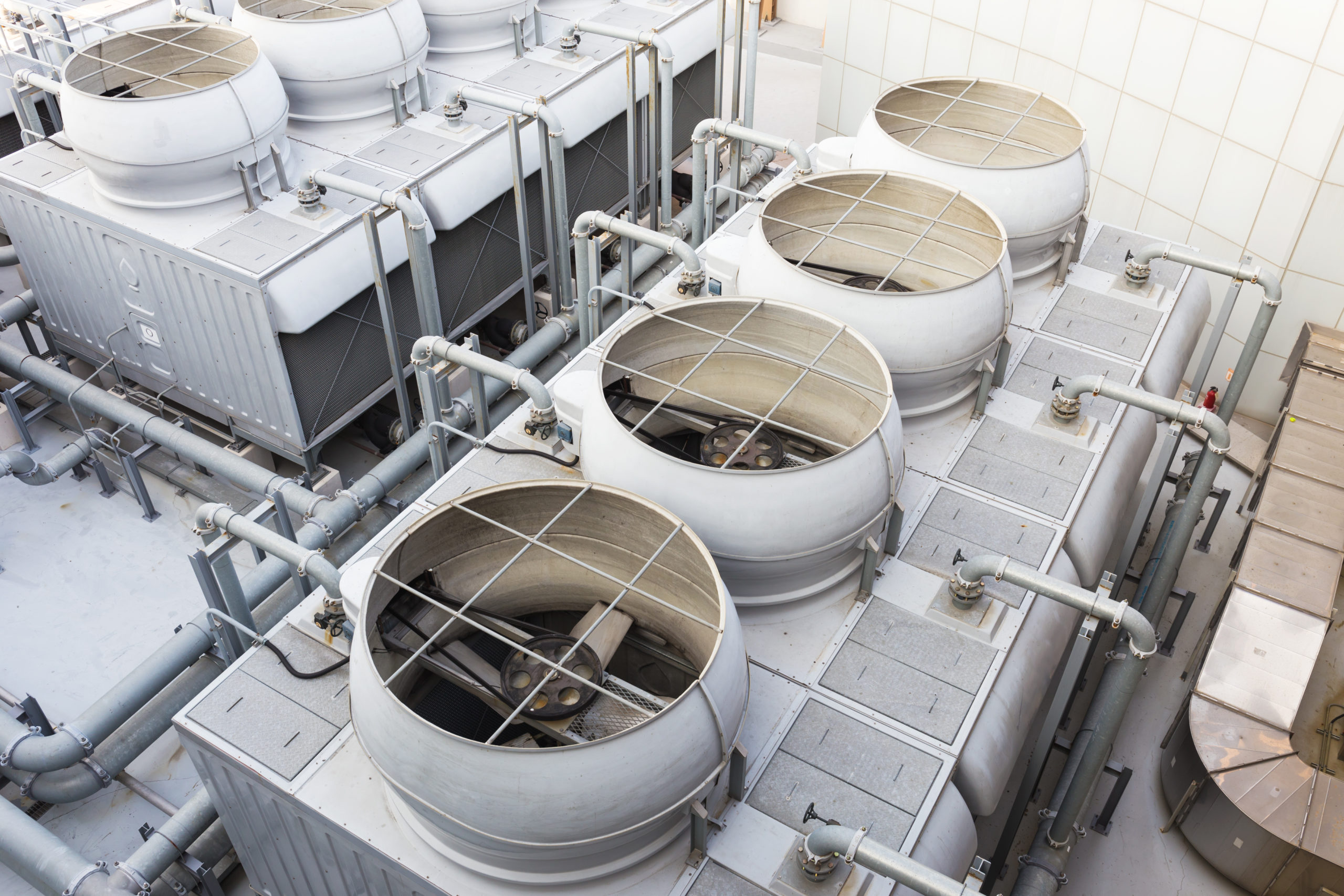
A growing Legionnaires’ disease outbreak in London is increasingly pointing toward a familiar and well-documented source: cooling towers.
According to the UK Health Security Agency (UKHSA), eight confirmed cases have been identified with identical bacterial sequence types, with 13 additional cases under investigation.
This combination—genetic matching across cases and absence of a single identified exposure site—is highly consistent with aerosol dispersion from one or more contaminated cooling towers.
The Key Clue: Identical Biological Strain
Public health investigators rarely get a clearer signal than this:
- All confirmed cases share the same strain of Legionella
- Individuals were exposed across different locations in North West and South West London
- No single indoor site (hotel, hospital, etc.) has been identified
This pattern strongly suggests a common airborne source affecting a wide geographic area—a hallmark of cooling tower–related outbreaks.
Cooling towers can release fine water droplets into the air, which may travel hundreds to thousands of feet, exposing individuals who may have no direct connection to a specific building.
Public Health Response Confirms the Likely Source
Perhaps the strongest real-world indicator is not just the data—but the response.
Authorities have already implemented:
- Inspection of cooling tower systems
- Water sampling from high-risk installations
- Precautionary shock-dosing of cooling towers
This is not a generic response. It is a targeted intervention used when cooling towers are the leading suspected source of an outbreak.
Public health agencies do not broadly dose infrastructure without reason. The decision to treat cooling towers reflects a risk-based conclusion that these systems are the most probable origin of exposure.
Why Cooling Towers Fit the Evidence
Cooling towers are uniquely capable of producing the exact outbreak pattern seen in London:
- Wide-Area Exposure
They emit aerosolized water that can spread bacteria over a large geographic footprint.
- Consistent Bacterial Strain
A single contaminated tower—or a network of similarly maintained systems—can produce genetically identical infections.
- No Obvious Common Location
Unlike outbreaks tied to a hotel or hospital, victims may have no shared building exposure.
- Early-Season Activity
Cooling towers operate year-round, making them a likely culprit in off-season outbreaks, such as this March cluster.
The Absence of a Single Site Is the Evidence
One of the most important—but often misunderstood—facts about this outbreak is:
The failure to identify a common exposure site is not a mystery—it is evidence.
When cases are spread across multiple neighborhoods with no shared indoor location, investigators look to outdoor aerosol sources. Cooling towers are at the top of that list.
What This Means for Risk and Prevention
This outbreak reinforces a critical principle:
- Legionella bacteria may exist in many water systems
- Disease occurs when bacteria are amplified and dispersed into the air
- Cooling towers are among the most efficient amplification and distribution systems known
Prevention therefore depends on:
- Proper maintenance of cooling towers
- Routine testing and monitoring
- Immediate remediation when contamination is suspected
Final Takeaway
The London outbreak is following a well-established pattern seen in prior Legionnaires’ disease clusters around the world:
- Identical bacterial strains
- Geographically dispersed cases
- No single shared indoor exposure
- Targeted cooling tower intervention
Taken together, these factors point strongly in one direction:
Cooling towers are the most likely source of this outbreak.
As the investigation continues, confirmation may come through environmental testing. But from an epidemiological standpoint, the indicators are already clear.