Two Legionnaires’ cases prompt an investigation at a Baltimore hotel
The Baltimore City Health Department and the Maryland Department of Health are investigating two laboratory-confirmed cases of Legionnaires’ disease among people who stayed at the Residence Inn by Marriott Baltimore on the Johns Hopkins Medical Campus, at 800 N. Wolfe St. Both guests stayed at the hotel within the past five months.
What health officials have said so far
If you or someone you love stayed at this hotel recently, news like this can be unsettling. This post explains what officials have said so far, what Legionnaires’ disease is, and practical steps to protect your health.
What health officials have said so far
The health department is asking anyone who stayed overnight at the hotel on or after September 13, 2026, and was later diagnosed with Legionnaires’ disease to contact:
- Baltimore City Health Department: 410-396-4436
- Maryland Department of Health: 410-767-6700
According to the health department, guests who stayed since that date, have no symptoms, and whose last overnight stay ended more than 14 days ago “are not likely to develop Legionnaires’ Disease.”
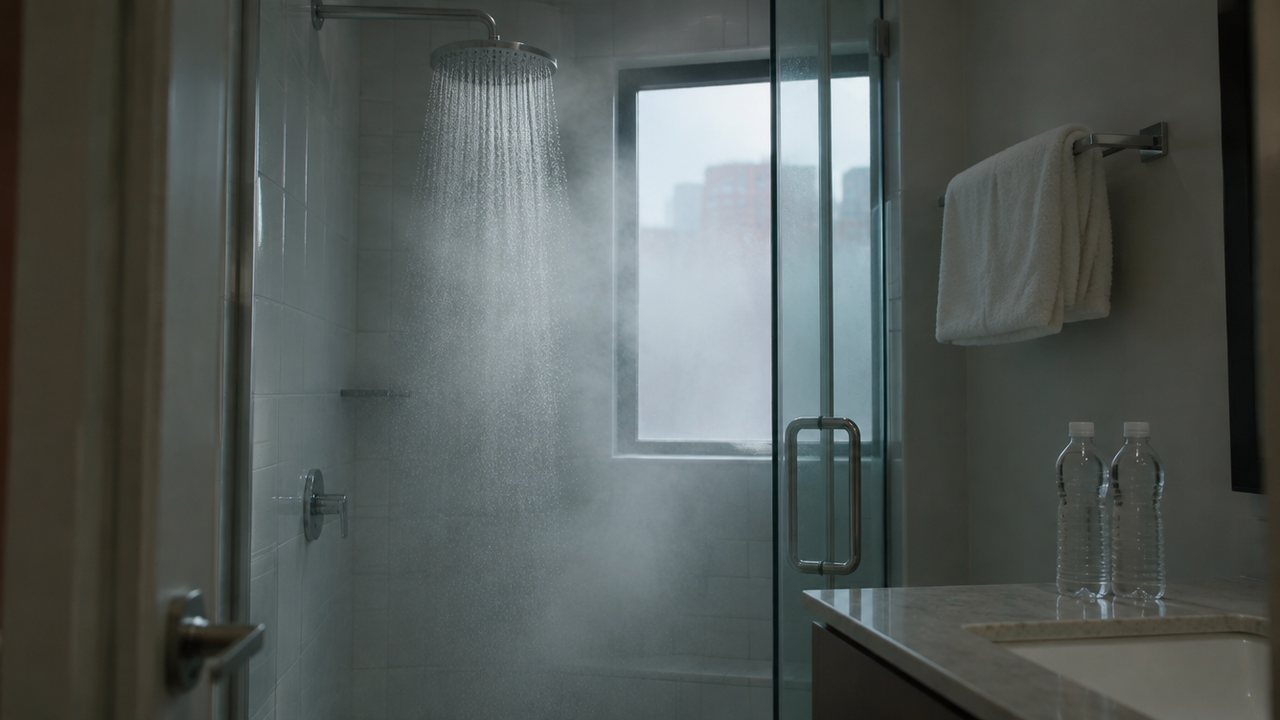
For people staying at the hotel now, officials advised those at high risk to consider not staying there. Other guests were told to avoid showering, to fill a bathtub slowly while staying out of the bathroom with the door closed, and to use bottled water for drinking and brushing teeth.
Several key details have not been released. Officials have not said when the guests tested positive, whether either was hospitalized, or when water testing results will be available.
Why the hotel’s location matters
The hotel sits on the campus of a major academic hospital. Its guests can include patients traveling for care, such as cancer treatment, transplants, or complex surgery, and relatives staying near a hospitalized loved one. Some of these travelers are older or have weakened immune systems, which are the groups most likely to become seriously ill if exposed.
Caregivers deserve attention too. A spouse or adult child who stayed at the hotel while a relative was in the hospital may not think of themselves as at risk. But older caregivers, or those with their own chronic conditions, face the same risks as any other guest.
Legionella concerns elsewhere in Baltimore
This is not the first time Legionella has surfaced in Baltimore buildings. Water testing at three Baltimore City courthouses found elevated levels of the bacteria, and it has also been found at the State Center complex. In 2018, several Legionnaires’ cases led to partial water restrictions at The Metropolitan of Baltimore apartment complex, where residents went nearly a month unable to shower or drink from their faucets.
Understanding Legionnaires’ disease
Legionnaires’ disease is a serious form of pneumonia caused by Legionella bacteria. The bacteria grow in warm, human-made water systems. Plumbing systems, shower heads, hot tubs, and decorative water features are common sources.
People get sick by breathing in tiny droplets of mist that contain the bacteria. According to the CDC, the disease generally does not spread from person to person, so household contacts of someone who becomes sick do not need to isolate. Most healthy people who are exposed do not become ill.
Symptoms
Symptoms usually appear 2 to 14 days after exposure and can include:
- Fever and chills
- Cough
- Shortness of breath
- Body aches
- Nausea, vomiting, or diarrhea in some people
Because these symptoms look like other types of pneumonia, Legionnaires’ disease is confirmed with specific tests, such as a urine test or a lab test on a sputum or lung sample.
Who is at higher risk
People at higher risk of serious illness include:
- People over age 50
- Smokers
- People with chronic lung disease or kidney disease
- People with cancer
- People with weakened immune systems
The illness can be serious. The CDC says about 1 in 10 people with Legionnaires’ disease die from complications, and hospitalization is common. The disease is treated with antibiotics, and early treatment improves the chance of recovery.
What to do if you stayed at the hotel
If you stayed at the Residence Inn on Wolfe Street, these steps, drawn from health officials’ guidance, can help protect your health:
- Watch for symptoms. If you develop a cough, fever, or shortness of breath within about two weeks of your stay, see a clinician.
- Tell your doctor about the stay, including the dates. That detail can prompt Legionella testing that might otherwise be skipped.
- Get emergency care for severe symptoms. Trouble breathing, chest pain, confusion, or bluish lips need immediate medical attention.
- Ask about testing if you already had pneumonia. If you were diagnosed with pneumonia after a stay on or after September 13, ask your doctor whether you were tested for Legionella.
- Report a diagnosis. If you were diagnosed with Legionnaires’ disease, contact the Baltimore City Health Department (410-396-4436) or the Maryland Department of Health (410-767-6700). Reporting helps officials find additional cases.
- Plan ahead if you have a reservation. You can ask the hotel what testing has been done and whether any fixtures have been treated. If you are in a high-risk group, consider the health department’s advice to look at other lodging until results are released.
It is also a good idea to keep records of your stay, such as receipts or booking confirmations, along with your medical records.
Understanding your options
Your health comes first. If you think you may have been exposed, the most important step is to see a medical provider.
If you or a family member was diagnosed with Legionnaires’ disease after staying at this hotel, you may have questions about what happened and what your options are. Every situation is different, and whether a legal claim is possible depends on the specific facts, including what the investigation finds.
Jules Zacher P.C. represents people who have been diagnosed with Legionnaires’ disease. If you would like to talk through your situation, you can contact our office at 215-988-0160 or [link to contact form] for a free consultation. There is no obligation, and we are glad to answer your questions.
This article is for general informational purposes only and is not legal or medical advice. Contacting our firm does not create an attorney-client relationship. Every case is different, and past results do not guarantee a similar outcome. Information in this post is based on news reports as of November 20, 2026, and may change as the investigation continues. [Attorney Advertising.]